25+ countries worldwide





Triple P International launches inaugural ‘Reflect’ Reconciliation Action Plan
Triple P International (TPI) has launched the first ‘Reflect’ stage of its Reconciliation Action Plan (RAP), marking an important step in its reconciliation journey with Aboriginal and Torres Strait Islander peoples and communities.
The RAP was launched at a special event in Meanjin (Brisbane), Australia, where Triple P welcomed guests and employees to its headquarters on the lands of the Jagera and Turrbal people.
At its core, this RAP marks a significant milestone in Triple P’s ongoing commitment to reconciliation with Aboriginal and Torres Strait Islander peoples. The RAP has been created to embody Triple P’s dedication to the families and communities that it serves, where First Nations families are celebrated and empowered to raise happy and healthy children.
“We recognise that First Nations peoples' ways of learning, teaching, and raising families have deep cultural roots that are significant to the community,” said Triple P International Executive Director and RAP Working Group Member, Dr Jenna McWilliam.
“This is why we have pledged to foster and promote cultural awareness and integrate the perspectives of Aboriginal and Torres Strait Islander peoples into our programs and services, creating an equitable and inclusive environment for all parents and carers who seek out Triple P,” she said.
Triple P’s reconciliation journey begins with these main goals: engaging its people in the importance of reconciliation, strengthening relationships with Aboriginal and Torres Strait Islander stakeholders, and identifying where Triple P can have the greatest impact.
“This RAP enables us all to learn, act, and transform throughout our journey of reconciliation by increasing our collective cultural knowledge and capability, Dr McWilliam said. “It will also help Triple P to continue to improve the support we provide to communities; by ensuring we deliver culturally responsible parenting support where First Nations parents feel safe, understood, and confident.”
The latest version of the Triple P for First Nations Families program was shared at the event, with Vena Beetson, First Nations (Gubbi Gubbi and Wiradjuri) Trainer and Implementation Consultant, sharing: “One of the greatest strengths of this program is that we are training practitioners to deliver within their own communities. This creates opportunities for genuine collaboration, strong community partnerships, and locally led solutions.”
“In my role, I have seen the impact of investing in local practitioners and building the skills and confidence of parents. When we strengthen families today, we help shape stronger families for future generations,” Ms Beetson said.
Helena Wright, Deputy Chief Executive Officer, Queensland Aboriginal and Torres Strait Islander Child Protection Peak (QATSICPP) concluded the event, saying: “Reconciliation is a journey and is something that we choose every day, it’s everywhere we walk, in every way we work, in the way we listen to others, and importantly, the way we walk alongside our families. Triple P, sits at the heart of that journey."
“That’s why Triple P’s work matters so much. Every interaction with a family is an opportunity to build trust, every decision you make is an opportunity to show respect and to include − and not just to invite − Aboriginal voices and Torres Strait Islander voices and knowledges,” she said.
“Reconciliation doesn’t happen to us; it happens through us, and we all have a role to play,” Ms Wright said.
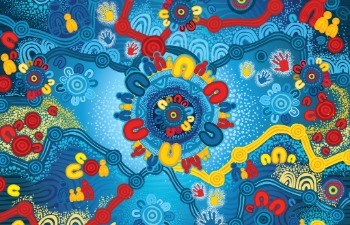
An important part of Triple P’s RAP journey has been the commissioning of a bespoke artwork, Learning Together, by artist Elaine Chambers-Hegarty.
- Read the artwork story
- Download Triple P's Reconciliation Action Plan (87mb PDF)
- More information about the RAP process can be found at Reconciliation Australia’s website.